MLB Betting Apps Compared: Top Sportsbooks and Baseball Odds
 Available in US
Best MLB Betting Apps: Sportsbook Features and Odds Quality
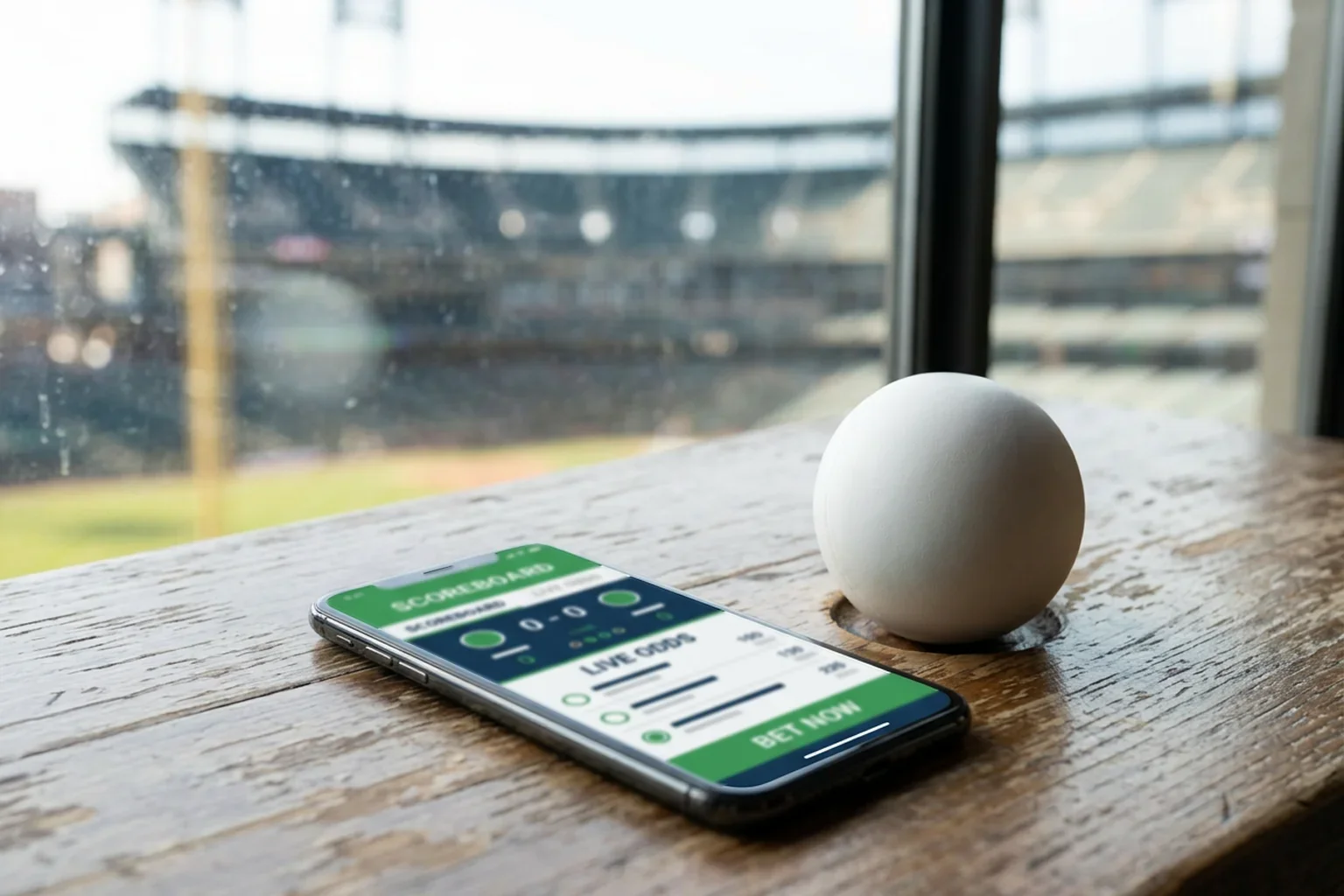
I maintain accounts on six different sportsbook platforms, and the reason is not loyalty — it is arithmetic. The same game on the same night can be priced at -145 on one app and -135 on another, and that ten-cent difference, repeated over hundreds of bets across a season, is the difference between marginal loss and marginal profit. But price is only one dimension. The depth of prop markets, the speed of live lines, and the quality of baseball-specific tools vary dramatically from one platform to the next. Roughly 90% of all sports bets are now placed on mobile devices, which means the app is the product, and the product is not uniform.
What follows is not a ranking. I am not going to tell you which app is “best” because the answer depends entirely on what you bet, how you bet, and which state you are in. What I will do is walk through the dimensions that matter most for MLB bettors and explain how to evaluate them yourself, because the landscape shifts every season as operators add features, adjust margins, and compete for your handle.
Choosing a fast and reliable application is crucial if you plan to implement a profitable MLB live betting strategy during the games.
Comparing Odds Quality: Hold Rates and Line Accuracy for MLB
Odds quality is the single most important factor for anyone who bets baseball seriously, and it is the factor most bettors ignore. The hold rate — the percentage of total wagered money the sportsbook retains after paying winners — varies by operator and by sport. Some platforms price MLB moneylines with a 3% to 4% overround, while others bake in 5% to 6%. Over a 162-game season, that margin difference compounds into real money.
I test this by tracking opening lines on the same games across multiple platforms over a two-week sample. Pick twenty games, record the moneyline on each platform, convert to implied probabilities, and calculate the average overround. The platform with the lowest consistent overround is giving you the most competitive prices. This exercise takes about thirty minutes and can save hundreds of pounds over a season.
Line accuracy — how close the posted line is to the eventual closing line — is a subtler measure. Platforms that attract sharp bettors tend to have more accurate opening lines because the sharp money pushes the line toward fair value quickly. Platforms that cater to recreational bettors sometimes hold their opening lines longer, which can create opportunities if you have a strong pre-game model and can get down early before the line moves.
The average sportsbook win rate reached 9.7% in 2025, but that figure masks wide variation between operators. The platforms with the tightest MLB lines often have thinner margins overall, which means they compete on volume rather than hold. For a serious baseball bettor, those are the platforms you want to use as your primary book, with wider-margin platforms reserved for markets where the primary book does not offer the bet you want.
Prop Market Depth and Same Game Parlay Options
This is where platforms diverge most sharply. Some sportsbooks offer twenty or more prop markets per MLB game — pitcher strikeouts, batter hits, total bases, home runs, walks, runs scored, stolen bases, and various combinations. Others offer a handful of the most popular props and nothing else. If player props are central to your strategy, the depth of the prop menu matters as much as the price.
I have found that the platforms with the deepest prop menus also tend to have wider margins on individual props. The logic is commercial: casual bettors gravitate toward props because they are fun and personal, and they are less price-sensitive than sharp moneyline bettors. Operators can afford to offer a huge selection because the wider margins compensate for the smaller per-bet handle. That trade-off is worth understanding. A platform with thirty prop options at -130 is not necessarily better than a platform with ten props at -115, depending on whether the ten it offers include the markets you actually want to bet.
Same-game parlay builders vary in flexibility and in how aggressively they adjust for correlation. Some platforms allow you to combine almost any combination of props with game-level outcomes; others restrict certain combinations. The correlation adjustments also differ. I have tested identical SGP constructions across three platforms and seen payout differences of 20% or more. If SGPs are part of your approach, testing the same build across multiple apps before locking in is time well spent.
Compare the top-rated sportsbooks and exclusive offers directly on the premier MLB betting portal.
Live Betting Tools, Cashout, and Speed
Live betting is where app quality becomes tangible. A platform with a two-second lag on live line updates is operating in a different universe from one with a ten-second lag, because in live baseball, the line moves after every pitch. Speed of line update, speed of bet confirmation, and frequency of available live markets are all dimensions that separate the serious live-betting platforms from the ones that treat live as an afterthought.
Cashout — the ability to close a bet before the game ends and take a reduced payout or cut a loss — is offered by most platforms but with different terms. Some calculate cashout offers generously; others shade them heavily in the sportsbook’s favor. I use cashout sparingly, but when I do, I compare the offered cashout value to what I could get by placing a counter-bet on the opposite side. If the cashout offer is worse than the hedge, I hedge manually instead.
Michal Lorenc, who studies the intersection of sport and wagering at the University of Michigan, has observed that sports betting is here to stay and that the coming years will bring changes and adjustments to policies and practices, with some rules likely relaxed. That trajectory suggests the competitive landscape among betting apps will intensify. Operators that invest in baseball-specific features — deeper props, faster live lines, better data visualization — will pull ahead of those that treat MLB as just another sport on the menu.
My practical recommendation: open accounts on at least three platforms. Use the one with the best moneyline margins as your primary book. Use the one with the deepest prop menu for prop betting. Use the third for line shopping and as a backup when your primary book limits your action. This multi-platform approach is standard among serious bettors, and it is the simplest structural advantage you can give yourself. For a broader look at the analytical framework behind prop evaluation, the player props strategy guide covers what to do once you have found the right platform.
Which sportsbook has the deepest MLB player prop market?
The depth of player prop markets varies by operator and changes seasonally as platforms compete for bettors. Rather than relying on a single recommendation, compare prop availability across your available platforms for a sample of ten games at the start of the season. Track which platform consistently offers the widest range of pitcher, batter, and game-specific props. The answer may differ depending on your state and the operators licensed there.
Do odds vary significantly between MLB betting apps for the same game?
Yes. Moneyline odds on the same game can differ by ten to fifteen pence between platforms, and prop lines can diverge by twenty pence or more. Over a full season of regular betting, those differences compound into meaningful amounts. Line shopping across multiple platforms is one of the simplest and most reliable ways to improve long-term results without changing your handicapping process.
Published by the mlb Players Betting team.