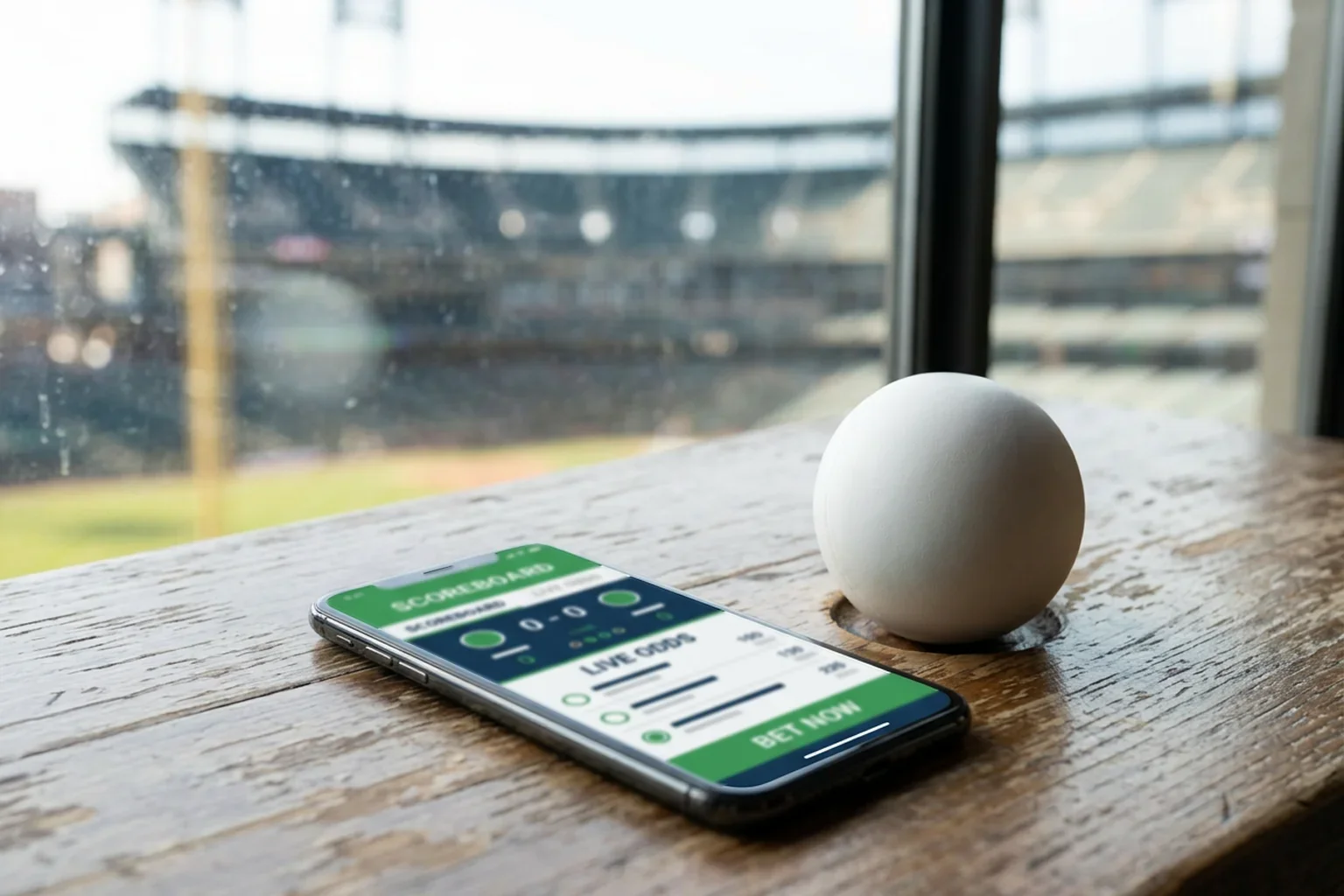
Mobile Sports Betting Statistics: Wagers and Mobile Device Trends
 Available in US
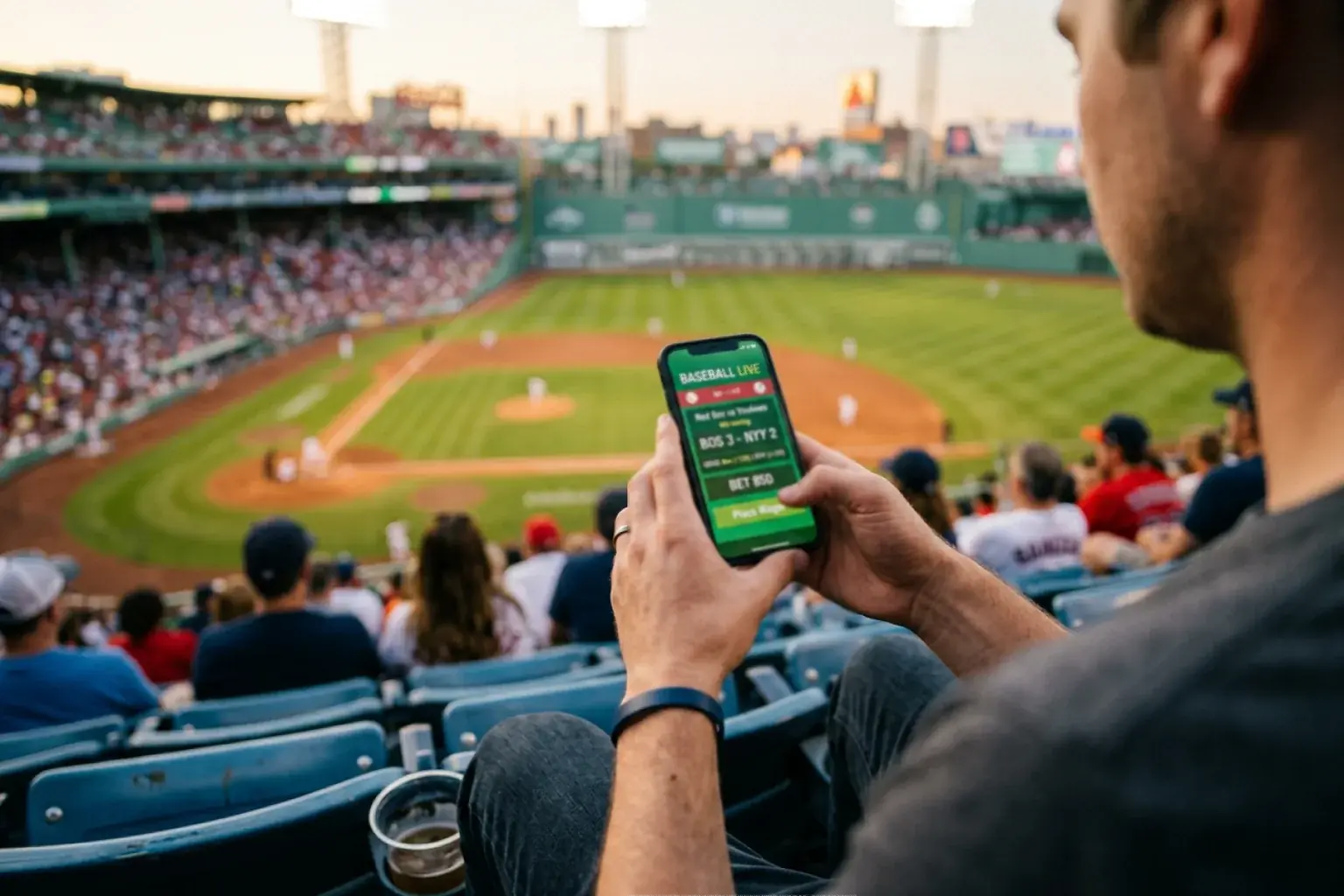
Mobile Sports Betting Growth: Phone-First Wagering Trends
The most important number in modern sports betting is not a line or a total. It is 90%. That is the share of all sports wagers now placed on mobile devices — phones and tablets rather than retail sportsbook counters or desktop computers. I have been covering this industry since before PASPA was struck down, and the shift from physical to mobile has been the single most transformative development in the market. It has changed who bets, when they bet, how much they bet, and what they bet on. And its implications for baseball, a sport played in 162 daily instalments over six months, are more significant than for any other major sport.
The mobile share was already dominant by 2022, but it has intensified since. In Ohio, 98% of the state’s £8.1 billion in 2025 handle came through online platforms. Approximately 22% of UK adults — and 48% of men aged 18 to 49 — now hold at least one sportsbook account. Those accounts live on their phones, accessible at any moment, from any location within a legal-betting state. The friction that once separated the impulse to bet from the act of betting has been reduced to a thumbprint and a tap.
90% Mobile, 50%+ Live: The Numbers on How Bets Are Placed
The 90% mobile figure is the headline, but the composition beneath it tells a richer story. More than half of all sports bets are now live wagers — bets placed after the game has started, while the action is unfolding. Live betting barely existed as a mass-market product before mobile platforms made it possible. You cannot place a meaningful live bet from a retail window, because by the time you walk to the counter and state your selection, the line has moved. Mobile is the only platform fast enough for live markets, and live markets are now the majority of volume.
The overlap between mobile and live creates a behavior pattern that is specific to sports betting and unlike any other form of gambling. A bettor watching a baseball game can place a pre-game moneyline bet on one app, switch to another app to take a live total after the third inning, place a pitcher-strikeout prop on a third app during the fifth inning, and close out a position on a fourth app when the closer enters in the ninth. That multi-platform, multi-bet, real-time behavior is the norm for engaged mobile bettors, and it drives both the volume and the velocity of money flowing through the market.
For the industry, this behavior is enormously profitable. Each additional bet carries a vig, and the frequency of betting has increased dramatically with mobile access. A bettor who might have placed one pre-game bet per day from a retail counter now places three, five, or ten bets from their phone during a single game. The average sportsbook win rate reached 9.7% in 2025, and that margin is applied to a far larger number of transactions per customer than the pre-mobile era generated.
How Mobile Access Changes Betting Behavior and Frequency
The behavioral research on mobile betting is still catching up to the market, but the early findings are consistent with what I observe anecdotally. Mobile access increases betting frequency, reduces the time between deciding to bet and placing the bet, and makes it easier to chase losses by placing additional wagers immediately after a loss. The combination of speed, convenience, and constant availability creates conditions that are ideal for engagement and risky for vulnerable users.
The concept of “session length” illustrates the shift. In a retail environment, a betting session has natural limits: you drive to the sportsbook, stand in line, place your bets, and leave. The session is bounded by physical constraints. On mobile, the session has no boundaries. It begins when you pick up your phone and ends when you put it down — or, for some users, it never ends. The phone buzzes with score alerts, push notifications from sportsbook apps, and social-media posts about lines and picks. Each notification is a prompt to engage, and each engagement is a potential bet.
I have spoken with problem-gambling counsellors who describe mobile access as the defining challenge of their work. The old model of treatment assumed that a gambling problem could be managed partly through environmental control — stay away from the casino, avoid the bookie, remove yourself from the context where gambling happens. Mobile betting eliminates that option. The casino is in your pocket. The context is everywhere. The only environmental control available is deleting the app, and even that is reversible in thirty seconds.
What Mobile-First Betting Means for Long Baseball Seasons
Baseball is uniquely affected by mobile betting because of the sport’s structure. The MLB regular season runs from late March to early October, with games played nearly every day. A typical week includes six games per team, often spread across afternoon and evening start times. For a mobile bettor who follows one team, that is six opportunities per week to place pre-game bets, live bets, and player props. Over a full season, the volume of available betting opportunities per team exceeds one thousand.
Compare that to the NFL, where each team plays once per week for seventeen weeks, or the NBA, where the season is long but the game schedule is less dense. Baseball’s daily rhythm aligns perfectly with the mobile-betting behavior pattern: check the matchup in the morning, place a pre-game bet at lunch, watch the middle innings on your phone during the commute home, and place a live bet during the seventh inning stretch. The sport’s pace — slow enough to study between pitches, long enough to accommodate multiple betting decisions — makes it the ideal vehicle for sustained mobile engagement.
That alignment has consequences beyond revenue. The integrity risks that micro-betting created were amplified by the mobile environment. The Clase pitch-fixing scheme allegedly operated through wagers placed on mobile platforms in real time during live games — a scheme that would have been impractical in a retail-only market. The speed and anonymity of mobile betting made the corruption possible, and the volume of legitimate mobile wagers made the corrupt ones harder to detect. MLB’s post-2025 reforms addressed the market design (capping pitch-level bets at £158) but did not address the delivery mechanism. As long as betting is mobile-first, the speed and accessibility that make the product attractive to consumers will also make it attractive to anyone seeking to exploit it.
The 90% mobile figure is not going to reverse. If anything, it will climb toward 95% or higher as remaining retail-only states open online markets and as younger demographics — who have never known sports betting without a phone — become the dominant customer base. The challenge for baseball, for regulators, and for anyone who cares about the integrity and health of the sport is to build safeguards that function inside a mobile environment rather than against it. The broader picture of how this mobile revolution intersects with baseball’s betting landscape is something I examine across the full guide to MLB players and betting.
What percentage of sports bets are placed on mobile devices?
Approximately 90% of all sports bets are now placed on mobile devices. In some jurisdictions the figure is even higher — Ohio reported that 98% of its £8.1 billion in 2025 handle came through online platforms. Mobile betting has become the dominant delivery mechanism for sports wagering, effectively replacing retail sportsbooks as the primary channel for the vast majority of bettors.
How has mobile betting changed in-game wagering behavior during MLB games?
Mobile access has made live betting the majority of sports wagering volume, with more than half of all bets now placed after a game starts. During MLB games specifically, bettors can place multiple wagers across different markets and platforms in real time — pre-game moneylines, live totals, player props, and inning-level bets. Baseball’s daily schedule and slow pace make it particularly well-suited to mobile live-betting behavior, generating far more betting opportunities per season than sports with weekly schedules.
Created by the ”mlb Players Betting” editorial team.