Sharp Money vs Public Money in MLB Betting: Line Movement Metrics
 Available in US
Sharp Money Indicators: Reading MLB Betting Line Movement
A study of 9 million bettors during the 2023-2024 NFL season found that 60% of all bettors generated just 1% of sportsbook revenue. That number reframed how I think about the entire betting market. The casual majority — the recreational bettors placing £7.9 parlays and £15.8 moneylines — contribute noise. The remaining 40%, which includes professional and semi-professional bettors, generate the overwhelming bulk of the money that moves lines and creates the market structure you see on your screen. Understanding the difference between these two groups is the foundation of reading MLB line movement.
In betting parlance, “sharp money” refers to wagers placed by sophisticated bettors who have models, track records, and bankrolls large enough to influence the line. “Public money” refers to the aggregate of recreational wagers — typically smaller, more numerous, and driven by name recognition, media coverage, and gut feeling rather than analytical process. The line you see at any given moment is the sportsbook’s attempt to balance these two forces while maintaining its margin. When those forces diverge, the line movement tells a story that is worth learning to read.
Sharp Money, Public Money, and Steam Moves Defined
I spent years misreading line movement because I did not understand the mechanics behind it. The conventional wisdom says that lines move toward the side receiving more money. That is true but incomplete. Sportsbooks do not weight all pounds equally. A £39,500 bet from an account flagged as sharp will move the line more than £158,000 in small recreational bets on the opposite side. The book respects the sharp bettor’s information because that bettor has demonstrated, over a verified sample, that his bets carry predictive value.
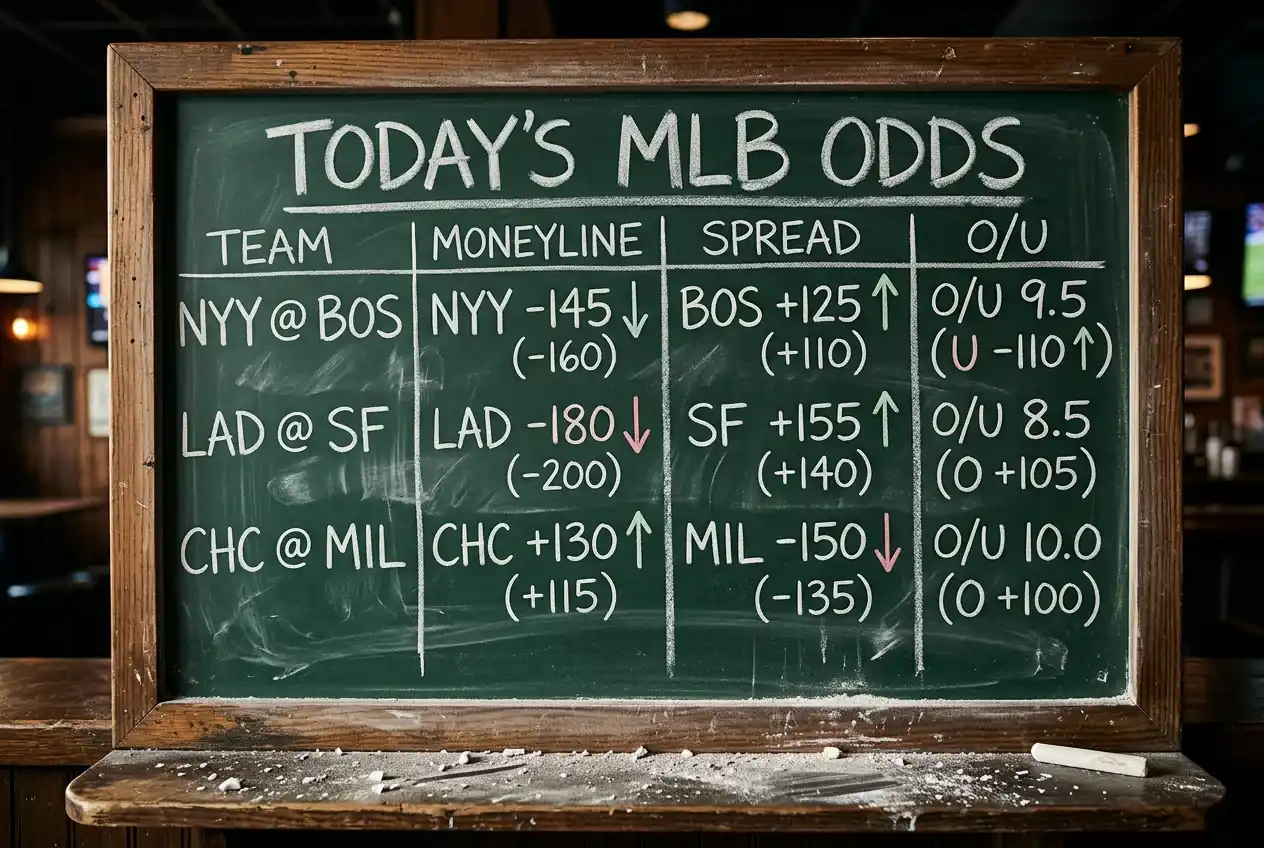
A “steam move” occurs when multiple sharp bettors hit the same side of a game within a short window, causing the line to shift rapidly across the entire market. If three respected accounts all take the Cubs at +120 within thirty minutes of each other, sportsbooks across the industry will move the Cubs’ line down to +115, +110, or lower within minutes. The move cascades because books know that sharp action on one platform signals information that will eventually reach all platforms. Getting down before a steam move is one of the most valuable skills in sports betting — and one of the hardest, because the window is measured in minutes.
Public money moves lines too, but more slowly and for different reasons. A nationally televised game between the Yankees and Dodgers will attract disproportionate public action on both sides, but especially on the perceived favorite. That weight of recreational money can push a line from -155 to -165 without any sharp involvement. The line moved because the book needed to balance its exposure, not because the information in the market changed. Learning to distinguish between information-driven moves and exposure-driven moves is the core skill of line-movement analysis.
Reverse Line Movement and What It Signals in Baseball
Reverse line movement is the signal I look for most often, and it is one of the clearest indicators of sharp activity in baseball. It occurs when the line moves in the opposite direction from the public betting percentages. Suppose 70% of bets on a game are on the Braves at -140, but the line moves from -140 to -135 — toward the Reds, not the Braves. The public is piling on Atlanta, but the line is moving toward Cincinnati. That means the money on Cincinnati’s side — fewer bets but larger ones — is outweighing the bet count on Atlanta’s side.
In MLB, reverse line movement is particularly informative because baseball’s daily schedule creates informational advantages for sharp bettors. Lineup announcements, late-breaking injury news, weather changes, and bullpen availability data all trickle in during the hours before first pitch. Sharp bettors process this information faster than the market adjusts, and their early bets move the line before the public has fully incorporated the same data. By the time the recreational bettor sees the line at -135 and assumes the Braves are still the play, the sharp money has already captured the value on the other side.
The average sportsbook hold rate of 9.7% in 2025 means the house wins regardless of which side the public or the sharps take. But within individual games, following sharp-money signals — when properly identified — can improve your hit rate by a few percentage points. That margin is slim, but over a 162-game season with bets on sixty or seventy games, a two- to three-point improvement in accuracy translates to real money.
Using Sharp Signals to Filter MLB Bets
I do not treat sharp signals as standalone plays. I use them as a filter. My process starts with my own model: power ratings, pitcher projections, park factors, and the other inputs I have described in previous articles. That model generates a list of games where I see a potential edge. I then cross-reference that list against line-movement data. If my model likes the Reds at +130 and the line has moved from +140 to +130 on sharp action toward Cincinnati, the signal confirms my analysis and I have more confidence in the bet. If my model likes the Reds but the line is moving away from them on sharp money, that is a warning sign that my model may be missing something.
The filter approach avoids the trap of blindly following sharp action, which is a common mistake among intermediate bettors. Sharp bettors are not infallible. They win roughly 55% to 57% of their bets on average — far better than the public but far from certain. Following them without your own analytical foundation means you are outsourcing your decision-making to someone whose reasoning you cannot see. When the sharp bettor loses — and they lose 43% to 45% of the time — you lose with them, and you have no framework for understanding why.
Timing matters as much as direction. Sharp money typically enters the market between one and three hours before first pitch, after lineup announcements and late injury reports are public. If you are checking lines at 10 a.m. for a 7 p.m. game, you are looking at a market that has not yet incorporated sharp action. Check again at 4 p.m. and the picture may look entirely different. I build my watchlist in the morning and make my betting decisions in the late afternoon, which gives me the maximum window to observe line movement and compare it to my model’s output.
One final note: the tools for tracking sharp money have improved dramatically. Several platforms now publish bet-count percentages alongside money percentages for MLB games, making it straightforward to identify divergences between the two. When 65% of bets are on Side A but only 40% of the money is on Side A, the implication is clear — the smaller number of bets on Side B are individually much larger. That pattern is the fingerprint of sharp involvement, and learning to read it consistently is one of the highest-leverage skills in the MLB betting strategy toolkit.
What is reverse line movement in MLB betting?
Reverse line movement occurs when the betting line moves in the opposite direction from the majority of public bets. For example, if 70% of bets are on Team A but the line moves toward Team B, it signals that the money on Team B’s side — fewer bets but larger amounts from sharp or professional bettors — is outweighing the volume of public action. It is one of the most reliable indicators of informed betting activity in baseball.
How do sportsbooks identify and respond to sharp money on baseball?
Sportsbooks track the betting history and win rate of every account on their platform. Accounts that demonstrate sustained profitability are flagged as sharp, and their wagers receive more weight in the line-setting algorithm than equivalent-sized wagers from recreational accounts. When sharp accounts place bets on one side of a game, the sportsbook adjusts its line immediately — often moving it more than the bet size alone would justify, because the sharp bettor’s historical accuracy suggests their position carries informational value.
Written by the editors at mlb Players Betting.