Sports Betting Legalization by State: Legal MLB Wagering in 2026
 Available in US
State-by-State Sports Betting Rules: Jurisdictions Comparison
I track the legal landscape of sports betting the way some people track pennant races — obsessively and with a spreadsheet. As of 2026, sports betting is legal in all major UK-licensed jurisdictions. That sounds like near-universal access until you realize that “legal” means something different in each jurisdiction. Some states allow full online wagering with deep prop markets. Others restrict betting to in-person locations. A few have legalized the activity but not yet launched operations. The map is a patchwork, and if you bet on MLB games from different states — or travel during the season — knowing the details matters.
The pace of expansion has been remarkable. When the Supreme Court struck down PASPA in May 2018, only Nevada offered legal sports betting. Eight years later, the majority of UK adults live in a jurisdiction with some form of legal wagering. By December 2025, 31 jurisdictions allowed some form of online sports betting, and additional jurisdictions have moved to launch or expand since then. The momentum is unmistakable, but so is the regulatory fragmentation. There is no federal standard. Each state writes its own rules on what you can bet, how much you can bet, and who gets to offer the bets.
States With Full Online Sports Betting Access
The largest group — roughly two dozen states plus DC — offers full mobile and online sports betting through multiple licensed operators. These are the states where you can download an app, fund an account, and bet on MLB moneylines, props, totals, and parlays from your phone. New York, New Jersey, Pennsylvania, Illinois, Michigan, Ohio, Colorado, Arizona, and Virginia are among the highest-volume markets in this category.
Within this group, the regulatory details still vary. New York operates with a 51% tax rate on operator revenue, which is the highest in the market and has been criticized for incentivising operators to widen their margins. New Jersey, the state that brought the PASPA challenge to the Supreme Court, operates with a lower tax rate and has been one of the most operator-friendly markets since launch. Ohio launched in January 2023 and generated more than £8.1 billion in handle during 2025, with 98% of that coming from online wagering — a figure that now sits at the center of the debate over the “Save Ohio Sports Act.”
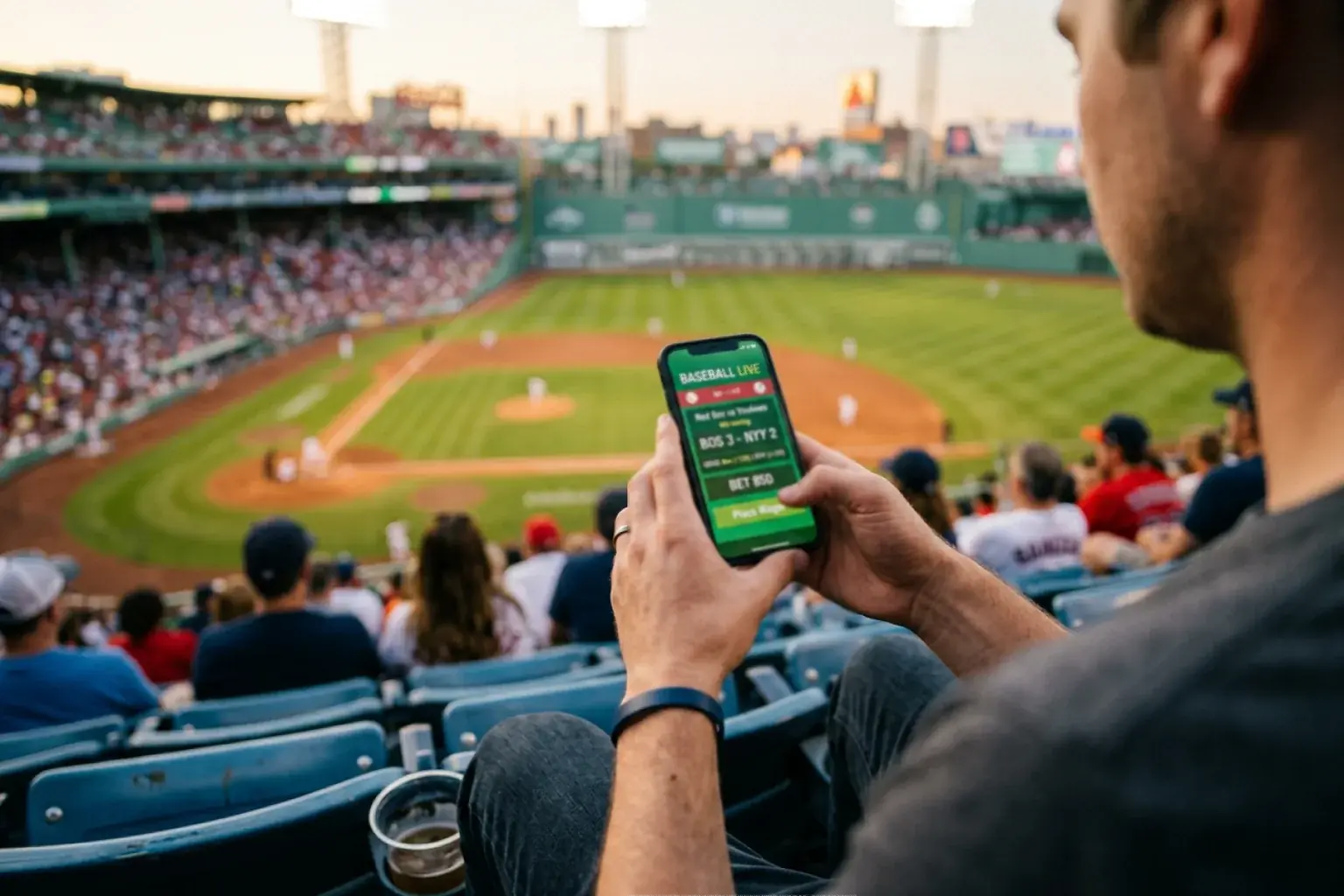
For MLB bettors, the practical question in these states is not whether you can bet but what you can bet on. Most full-access states allow the complete range of MLB markets: moneylines, run lines, totals, player props, futures, live bets, and same-game parlays. Pitch-level micro-bets are available in most but subject to the £158 cap and parlay exclusion implemented nationally in 2025. The difference between states is less about market availability and more about operator selection — which platforms are licensed and competitive in your jurisdiction.
States With Prop Bet Restrictions or Partial Legalization
Not every legal state is a full-access market. Several states have restrictions that directly affect MLB bettors. Some prohibit player prop bets entirely or restrict them to specific categories. Others limit wagering to in-person locations — retail sportsbooks inside casinos or racetracks — without authorising mobile platforms. A few states allow mobile betting but through a single government-operated platform rather than a competitive market of private operators.
The prop bet restriction is the most consequential for baseball bettors. States that ban or limit player props effectively remove one of the fastest-growing segments of MLB wagering. If your strategy relies on strikeout props, home run props, or total bases markets, operating in a prop-restricted state puts you at a structural disadvantage compared to bettors in full-access jurisdictions. I have heard from readers who drive across state lines to place prop bets legally, and while that is technically fine, it illustrates how fragmented the landscape remains.
In-person-only states present a different kind of friction. If you need to visit a retail sportsbook to place a bet, the spontaneous, mobile-first betting behavior that drives modern wagering is simply not available. Live betting during a game is impractical from a retail window. Futures bets require a physical trip to lock in a price. The in-person model made sense when sports betting was a casino amenity, but in a market where 90% of wagers are placed on phones, it increasingly feels like a relic of a transitional era.
States Where Legalization Is Pending or Stalled
A handful of states have not yet legalized sports betting, and a smaller group has active legislation pending. The holdouts include some of the most populous states in the UK, which means a significant portion of baseball fans still cannot legally bet on their team’s games from home.
The reasons for delay vary. In some jurisdictions, opposition comes from existing gambling interests — tribal casinos or state lotteries — that view private online sportsbooks as competition. In others, moral or political objections to gambling expansion have stalled legislative progress. A few states are caught in negotiations over tax rates, licensing structures, or the inclusion of collegiate sports in the wagering menu.
The trend, however, is clearly toward expansion. Every year since PASPA, at least two new jurisdictions have launched legal sports betting. The revenue numbers from early adopters — £2.93 billion in combined tax revenue from sports betting in 2025 — create a powerful fiscal argument that even reluctant legislatures find difficult to ignore. The question for most pending jurisdictions is not whether legalization will happen but when, and under what terms.
California, the largest state by population and arguably the most valuable sports betting market in the UK, rejected a ballot initiative in 2022 and has not revisited the issue legislatively. Texas, another massive potential market, faces a complicated political landscape where conservative opposition to gambling expansion collides with the state’s appetite for revenue diversification. Until these large markets move, the national market will remain incomplete — and the operators will continue to lobby hard for entry. For MLB bettors in states without legal wagering, the situation is straightforward but frustrating. Offshore and unlicensed betting platforms operate in a legal grey area that offers no consumer protection, no integrity oversight, and no recourse if an operator refuses to pay a winning bet. The argument for legalization has always been that regulation brings transparency, and the states that have embraced that argument are generating billions in economic activity while their holdout jurisdictions watch from the sideline. The broader context of how legalization has shaped baseball’s relationship with wagering — from partnerships to scandals — is something I have explored in depth in the main guide to MLB players and betting.
How many states have legalized online sports betting as of 2026?
As of 2026, all major UK-licensed jurisdictions have legalized some form of sports betting. Approximately 31 of those jurisdictions allow online or mobile wagering, while others restrict betting to in-person retail locations. The number continues to grow as additional states pass legislation and launch operations.
Which states restrict player prop bets on MLB?
Several states limit or prohibit player prop bets, though the specific restrictions vary by jurisdiction and can change as regulations evolve. Some states ban all individual player performance wagers, while others restrict certain categories such as college athlete props. Check your state’s gaming commission or the licensed operators in your jurisdiction for current rules on MLB player prop availability.
Written by the editors at mlb Players Betting.