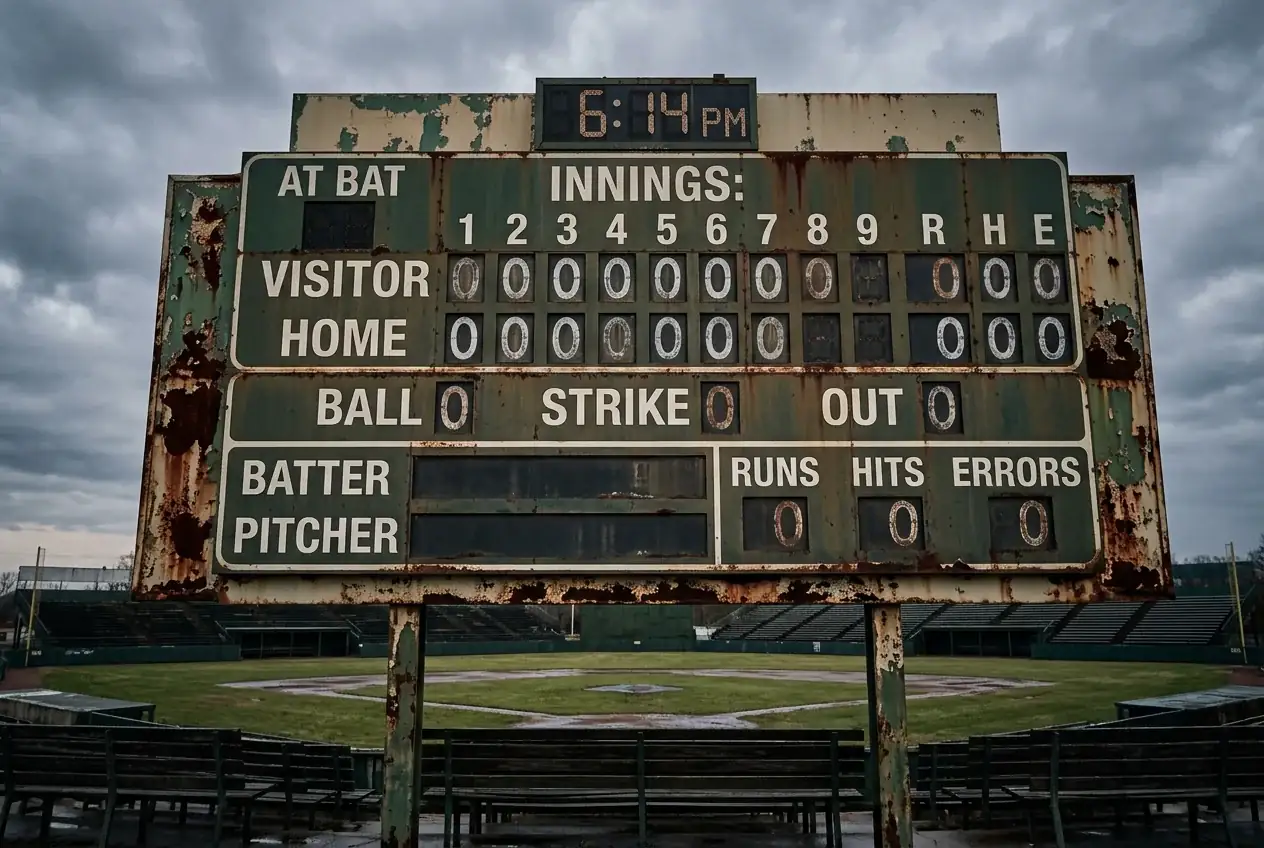
Micro-Bet Ban in MLB: Pitch-Level Wagers and £158 Caps
 Available in US

Pitch-Level Micro-Bets: MLB Betting Restrictions
Before 2025, you could sit on your sofa and bet £3,950 on whether the next pitch in a baseball game would be a ball or a strike. The bet would settle in about four seconds, and if you happened to know what the pitcher planned to throw, you would win at a rate that made traditional match-fixing look inefficient. That was the world micro-bets created — a world where the smallest unit of action in baseball became a financial instrument, and where the gap between a legitimate wager and a fraud tool was impossible to distinguish from the outside.
Micro-betting refers to wagers placed on individual pitches or at-bat outcomes during a live game. Will the next pitch be a fastball? Will the batter swing? Will the pitch be in the strike zone? These markets appeared as sportsbook operators raced to offer more granular betting products after the PASPA repeal opened the floodgates in 2018. The appeal was engagement — every pitch became a betting opportunity, turning a three-hour game into hundreds of micro-transactions. Operators covering 98% of the legal market embraced them. Then the Clase indictment happened, and the entire category got a ceiling nailed to it.
The New Rules: £158 Caps, Parlay Exclusions, and 98% Operator Compliance
The reforms came fast after the federal charges against Emmanuel Clase became public. MLB worked with sportsbook operators to implement three immediate restrictions on pitch-level markets. Individual wagers on pitch outcomes were capped at £158. Pitch-level bets were banned from inclusion in parlays and same-game parlays. And operators were required to flag and report unusual patterns in pitch-level wagering directly to MLB’s integrity team.
Commissioner Rob Manfred framed the response as a collaborative national solution, praising Ohio Governor DeWine for leadership on the issue and crediting the industry for working with the league to address the risks posed by pitch-level markets. The speed of adoption was notable: operators covering 98% of the legal betting market implemented the changes within weeks, a level of compliance that reflects both the severity of the scandal and the commercial reality that pitch-level bets were never a major revenue driver for most books.
The £158 cap is the centrepiece. At that limit, the maximum profit on any single pitch bet is modest — typically £118 to £198 depending on the odds. For a fixer like the co-conspirators in the Clase case, who allegedly won £316,000 over two years through pitch-level manipulation, the cap would require placing thousands of individual bets to replicate that haul. Each additional bet increases the detection risk, making the scheme economically unattractive at scale.
The parlay ban is equally important, because it eliminates the force multiplier. Before the ban, a bettor could combine three or four pitch-level legs into a single same-game parlay with a cumulative payout that far exceeded the sum of the individual bets. If you knew the outcomes of those pitches in advance, the parlay was effectively a guaranteed high-return ticket. Removing that option collapses the payout ceiling for anyone attempting to exploit inside information.
Why Pitch-Level Markets Were Uniquely Exploitable
I have written about betting integrity for years, and pitch-level markets stood out to me as a risk long before the Clase indictment confirmed it. The vulnerability comes down to two factors: information asymmetry and detection difficulty.
Information asymmetry is extreme at the pitch level. A pitcher knows what he intends to throw before anyone else in the stadium. If that pitcher communicates his intent to a co-conspirator — even through a signal as simple as a text message before the inning — the co-conspirator can place a bet on a specific outcome with near-certainty. The Clase case allegedly involved precisely this mechanism: co-conspirators knew what Clase would throw and bet accordingly, generating at least £316,000 in fraudulent winnings across the scheme’s two-year run.
Detection difficulty compounds the problem. Traditional integrity monitoring is designed to catch unusual patterns in game-level outcomes — a suspicious surge of money on one team’s moneyline, or an unexplained line movement that suggests insider information. Pitch-level bets are too small and too numerous for those systems to flag individually. A £1,580 bet on a single pitch result does not trigger the same alarms as a £39,500 bet on a game outcome, even if the former is corrupt and the latter is not.
The structural issue is that monitoring systems were built for a market that did not yet include pitch-level granularity. Integrity tools tracked game outcomes and, to some extent, player props that span an entire game. Pitch-by-pitch surveillance requires a different architecture — one that correlates individual wagers with specific pitch outcomes and cross-references the bettor’s identity against player and associate databases. Building that architecture takes time and investment, and it did not exist when the Clase scheme was operating.
How Operators and Leagues Enforce the Cap
Enforcement operates at two levels. Sportsbook operators implement the £158 cap as a hard limit within their platforms — the app simply will not accept a pitch-level wager above that threshold. The parlay exclusion works the same way: pitch-level markets are programmatically blocked from SGP and parlay builders. These are technical controls that do not require human oversight on a per-bet basis.
The reporting requirement is more nuanced. Operators are expected to monitor pitch-level wagering for anomalous patterns — clusters of maximum-size bets from the same account, coordinated betting across multiple accounts, or unusual win rates on specific pitch markets. Flagged activity is reported to MLB’s Department of Investigations and, in some cases, to regulators. The threshold for what constitutes “anomalous” is not publicly defined, which gives operators discretion — and which critics argue creates inconsistency.
State-level enforcement adds another layer. Ohio, where both Clase and Ortiz played, has been the most aggressive state in response. Governor DeWine had already highlighted the evidence that prop betting was harming athletics in Ohio before the Clase case broke, and regulators moved to impose additional restrictions beyond the national framework. The “Save Ohio Sports Act,” introduced in April 2026, would go further still, proposing a ban on all prop bets and limiting daily wagers to eight per person.
Whether the £158 cap is sufficient or merely a stopgap remains an open question. The cap reduces the financial incentive for pitch-level manipulation but does not eliminate it entirely. A determined fixer with access to multiple accounts — or with co-conspirators placing bets in parallel — could theoretically circumvent the limit. The cap also does nothing to address the underlying vulnerability: the fact that a single person controls the outcome of a pitch and can communicate that intent to an outsider. Until that information asymmetry is addressed through monitoring or market design, the risk remains. For the full context of how these reforms fit into the broader Rule 21 gambling policy framework, that conversation is worth having.
What specific MLB bet types are affected by the micro-bet cap?
The £158 cap and parlay exclusion apply to wagers on individual pitch outcomes — bets on whether the next pitch will be a ball or strike, the pitch velocity, whether the batter will swing, and similar pitch-level markets. Game-level props such as total strikeouts, hits, and home runs are not directly affected, nor are inning-level bets like NRFI. The restrictions target the most granular betting markets where a single player’s intent can determine the outcome.
Can bettors still place pitch-level props in states with legalized sports betting?
Yes, pitch-level markets remain available in most jurisdictions with legal online sports betting. The 2025 reforms did not ban these markets outright but capped individual wagers at £158 and excluded them from parlays. Some states, particularly Ohio, are considering more restrictive legislation that could further limit or eliminate pitch-level betting within their borders.
Created by the ”mlb Players Betting” editorial team.